
The best glass for soundproofing homes is usually acoustic laminated glass, specified as part of a well-designed sealed unit.
For installers and smaller trade customers, soundproofing is often raised by homeowners dealing with road noise, neighbours, rail lines or general outside disturbance. The right glass can help reduce noise entering the home, but performance depends on the full sealed unit specification, not the glass type alone.
This guide explains what glass works best for sound reduction, how acoustic glazing performs and what to consider when choosing sealed units for noise-focused projects.
Soundproof glass is a common term used to describe glazing designed to reduce the amount of external noise entering a property.
In practice, no residential glazing can make a home completely soundproof. A more accurate term is acoustic glazing or noise-reducing glass.
This type of glazing is designed to disrupt sound vibrations as they pass through the window. The stronger the specification, the more effectively the sealed unit can reduce noise transfer.
Sound travels as vibration. When outside noise hits a window, some of that vibration passes through the glass and into the room.
Acoustic glazing works by making it harder for those vibrations to travel through the unit.
This can be achieved through:
The glass specification is important, but the wider window system also affects performance.
Laminated glass is commonly used for acoustic performance because it includes an interlayer between two panes of glass.
This interlayer helps absorb and dampen sound vibrations, reducing the amount of noise that passes through the glass.
For homeowners, this can help reduce disturbance from:
For installers, laminated glass gives a clear technical benefit to explain. It is not simply thicker glass. It is a different type of glass designed to improve how the unit handles vibration.
Standard glass can reduce some noise, but acoustic laminated glass is designed to perform better where sound reduction is a priority.
| Feature | Standard Glass | Acoustic Laminated Glass |
| Noise reduction | Basic | Stronger |
| Construction | Single pane or standard sealed unit pane | Glass with acoustic interlayer |
| Best for | General glazing | Noise-sensitive locations |
| Main benefit | Everyday performance | Reduced sound transmission |
| Typical use | Standard windows and doors | Homes near roads, rail lines or busy areas |
Acoustic laminated glass is usually the better choice when noise reduction is a key requirement.
Triple glazing can help reduce noise, but it is not automatically the best option.
Many people assume that adding another pane of glass will always reduce more noise. In reality, acoustic performance depends on the full specification.
A well-designed double-glazed unit with acoustic laminated glass can outperform a standard triple-glazed unit if the triple glazing has not been specified for noise reduction.
The important factors include:
Triple glazing can be effective, but it should not be treated as the default answer for soundproofing.
Glass thickness affects how sound travels through the unit.
Using different glass thicknesses can help disrupt different sound frequencies. If both panes are the same thickness, they may respond similarly to certain vibrations, which can limit acoustic performance.
For noise reduction, variation in glass thickness is often useful because it helps the unit deal with a wider range of sound.
This is why acoustic glazing should be specified properly rather than chosen purely by pane count.
The best glass for soundproofing homes is not just one pane of glass. It is the full sealed unit build-up.
A noise-reducing sealed unit may consider:
Each element affects how sound moves through the glass.
For installers, this means the best result comes from choosing the right specification for the job, not simply asking for “soundproof glass”.
Argon gas is mainly used to improve thermal performance rather than acoustic performance.
It sits inside the cavity of a sealed unit and helps reduce heat transfer. While the cavity itself can influence sound reduction, argon should not be treated as the main acoustic feature.
For soundproofing, the more important factors are usually laminated glass, glass thickness, cavity design and the overall unit construction.
Homeowners usually ask about acoustic glazing when they are dealing with a specific noise issue.
Common examples include:
The type of noise matters. Low-frequency traffic noise behaves differently from voices or sudden impact noise, so the glass specification should be chosen with the main problem in mind.
For road noise, acoustic laminated glass is often a strong option.
Traffic noise is usually continuous and can become especially noticeable in bedrooms, front rooms and home offices. A sealed unit with acoustic laminated glass and the right cavity design can help reduce that disturbance.
The exact specification depends on the property and the level of noise. A busy main road may require a stronger acoustic specification than a quieter residential street.
Bedrooms and home offices are often the rooms where sound reduction matters most.
In bedrooms, external noise can affect sleep. In home offices, traffic or neighbourhood noise can make it harder to concentrate.
For these areas, acoustic laminated glass can be a useful upgrade where standard glazing is not providing enough noise reduction.
The unit should still be specified with the frame, room and noise source in mind.
In some cases, upgrading the sealed unit may improve noise reduction without replacing the full window frame.
This depends on:
If the frame is poor, damaged or badly sealed, glass alone may not solve the problem. Noise can also enter through gaps, trickle vents and weak installation points.
For installers, this is important to explain clearly. Better glass can help, but the full window system still matters.
Even the best acoustic glass will not perform properly if the window is poorly installed.
Noise can enter through:
This means acoustic performance should be treated as a complete system. The sealed unit is important, but so is the frame and installation.
A strong glass specification needs to be supported by good workmanship.
When choosing glass for a sound reduction project, start with the problem the homeowner is trying to solve.
Consider:
This helps narrow down the most suitable acoustic glazing specification.
The best glass for soundproofing homes is usually acoustic laminated glass within a correctly specified sealed unit.
It can help reduce external noise from traffic, neighbours and busy surroundings, but the final result depends on more than one feature. Glass thickness, cavity design, unit construction, frame condition and installation quality all affect acoustic performance.
Glasscraft manufactures sealed units for trade customers, including options that can support improved acoustic performance where noise reduction is part of the project requirement. For installers and independent trade customers, the right starting point is the noise issue itself, then the sealed unit specification needed to address it.The best glass for soundproofing homes is usually acoustic laminated glass within a correctly specified sealed unit.
It can help reduce external noise from traffic, neighbours and busy surroundings, but the final result depends on more than one feature. Glass thickness, cavity design, unit construction, frame condition and installation quality all affect acoustic performance.
Glasscraft manufactures sealed units for trade customers, including options that can support improved acoustic performance where noise reduction is part of the project requirement. For installers and independent trade customers, the right starting point is the noise issue itself, then the sealed unit specification needed to address it.
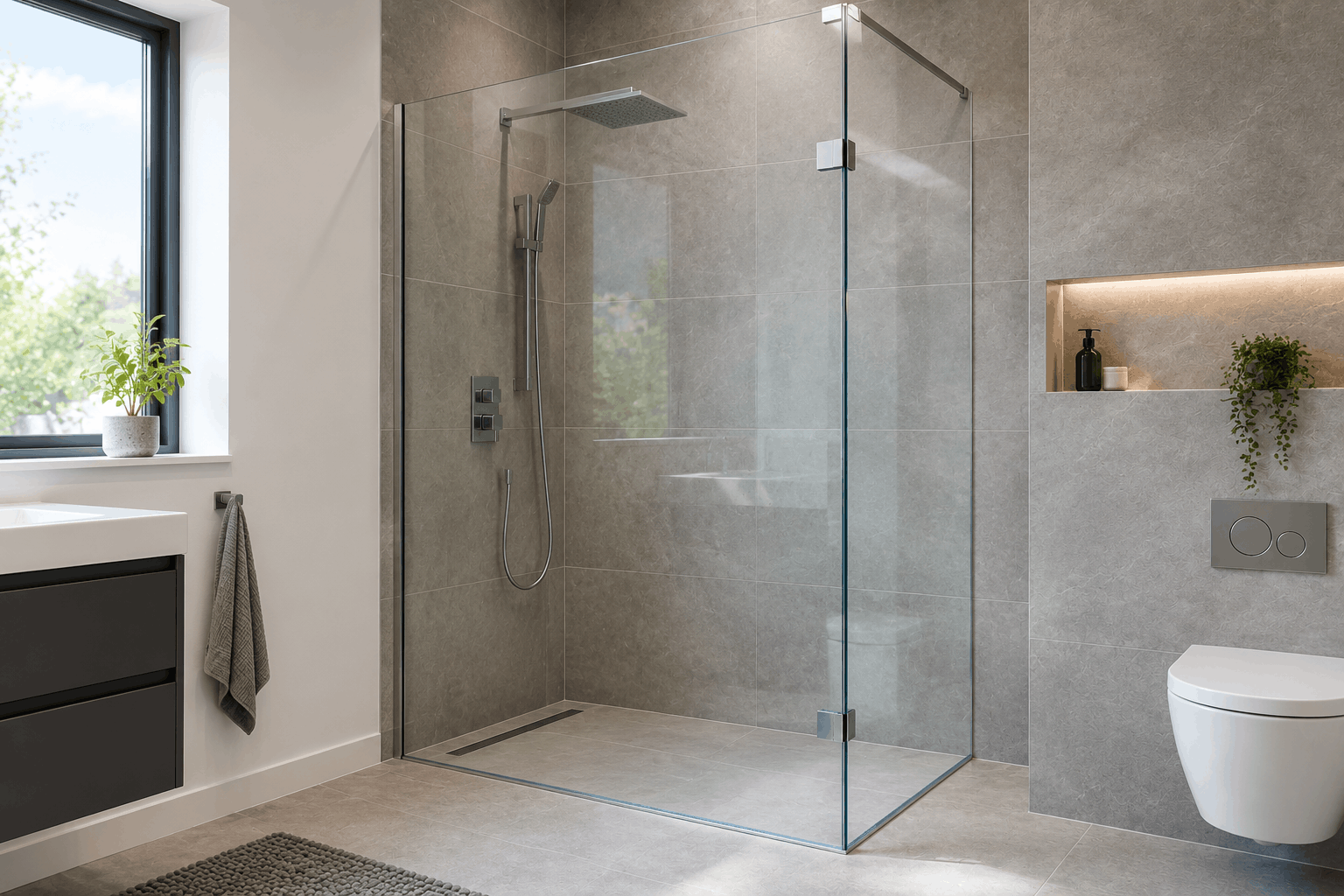
Choosing the right glass thickness is an important part of specifying a shower screen. The glass needs to be suitable for its dimensions, design, support and fixing system while also providing the appropriate safety performance. For installers and trade customers, this means there is no single thickness that should automatically be used for every shower […]
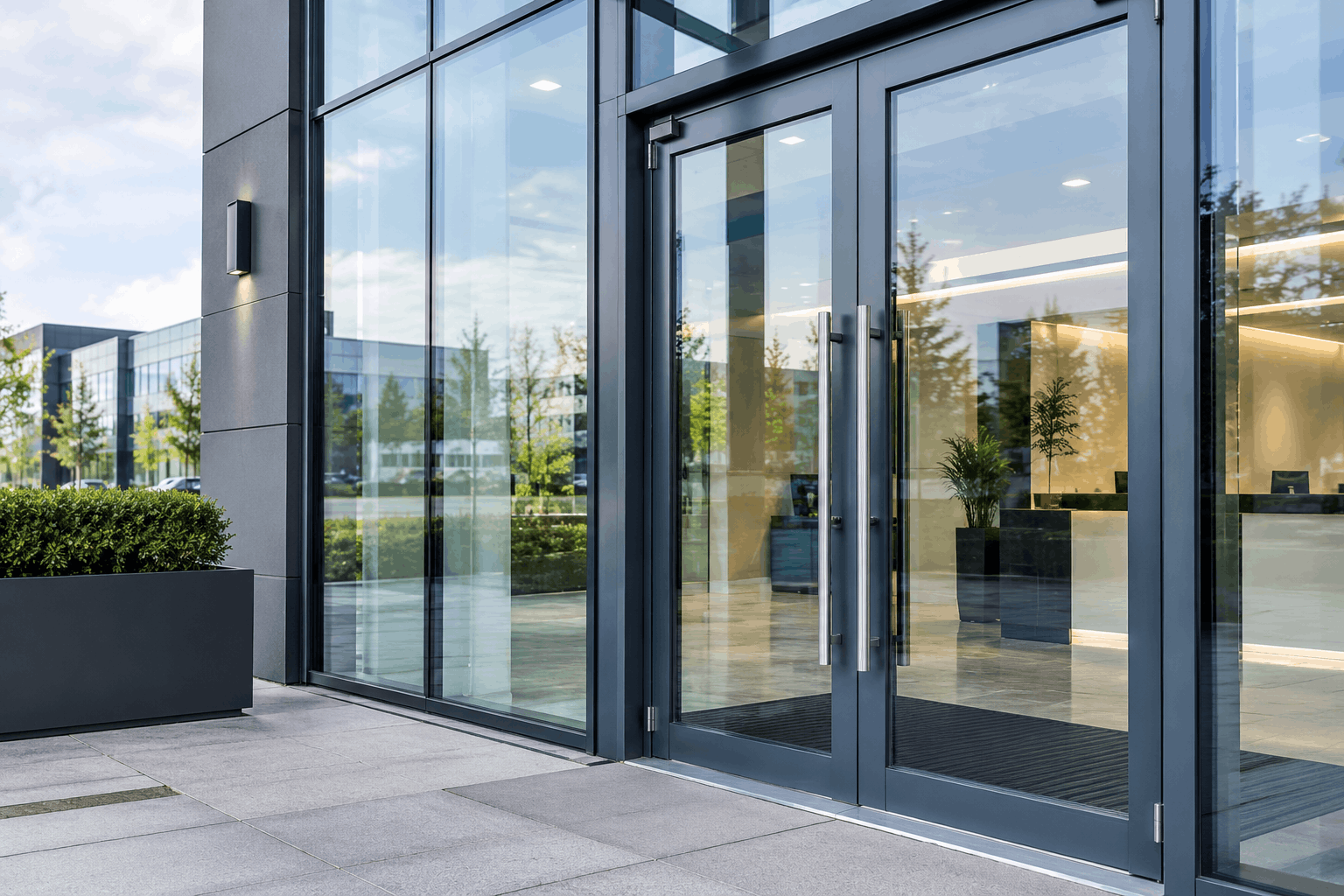
Glass plays an important role in modern commercial buildings, helping create bright entrances, offices and customer-facing spaces. Where additional protection is required, however, the glazing specification also needs to consider security. Security glass is designed to provide greater resistance and protection than standard glazing. The appropriate solution depends on the building, location of the glass […]
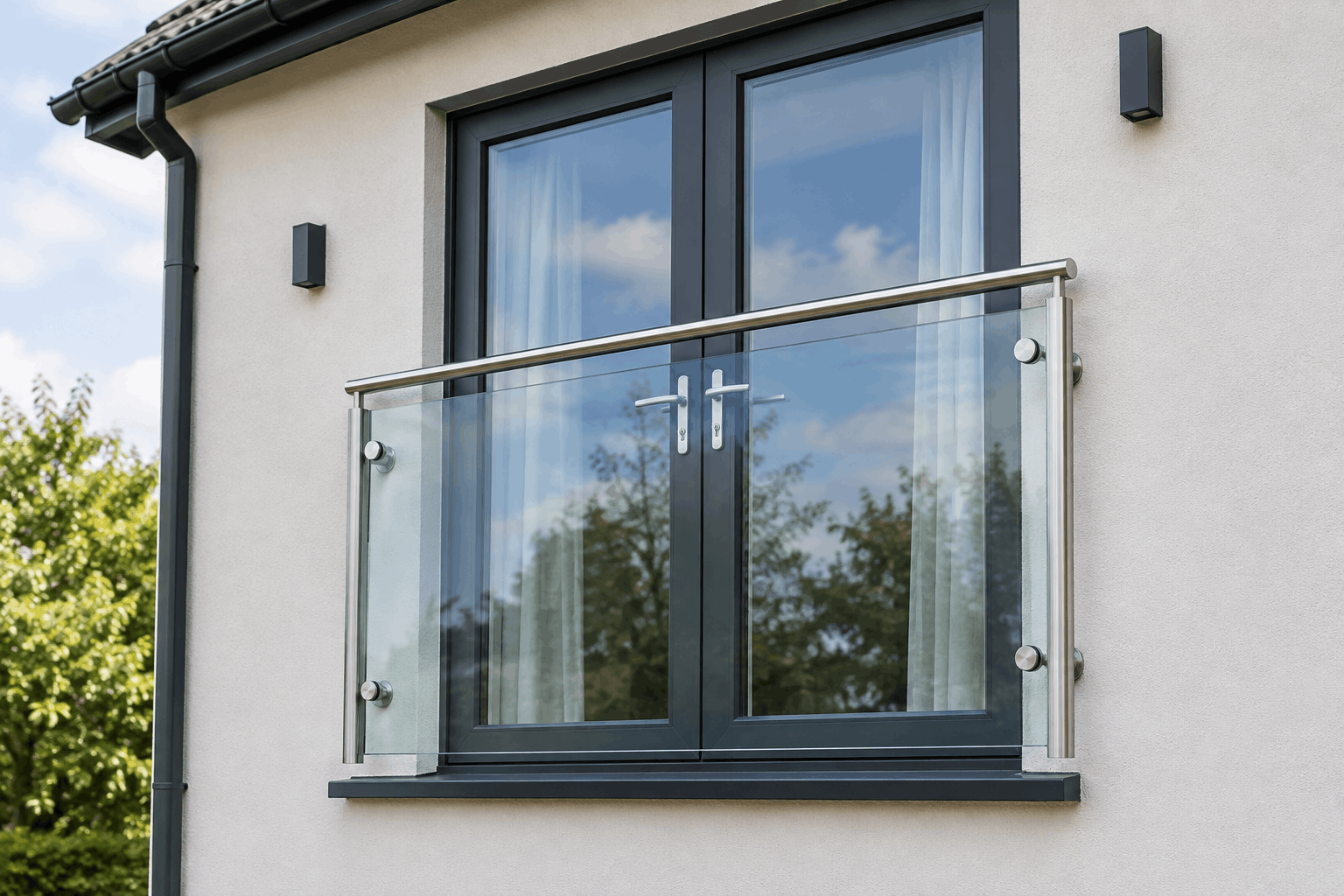
Juliet balconies provide a protective barrier across full-height windows, French doors and other openings at upper-floor level, allowing homeowners to open the doors while maintaining protection from falling. For installers and trade customers, the glass used for a Juliet balcony needs to do more than provide a clear, modern appearance. The glazing forms part of […]
Glass canopies can provide shelter above entrances, walkways and other external areas while maintaining a clean, open appearance. Because canopy glazing is installed overhead, choosing the correct glass is particularly important. Safety, strength, glass retention and the way the canopy is supported all need to be considered as part of the specification. For installers and […]

Front doors often need to balance two competing requirements. Homeowners want natural light to enter the property, but they may not want clear glass providing an unrestricted view into the home. Decorative glass can provide a practical solution by adding privacy and visual interest while still allowing light through the glazing. For installers and trade […]


 Order Tracker


 Customer
Login
Customer
Login