
Energy efficient glazing helps reduce heat loss by improving the way sealed glass units insulate the home.
For installers and smaller trade customers, energy efficient glazing is not just about offering an upgrade. It is about supplying a better-performing sealed unit that can help homeowners improve comfort, reduce wasted heat and support lower energy bills over time. The right unit specification can make a real difference, especially when Low-E glass, argon gas and warm edge spacer technology work together.
This guide explains how energy efficient glazing works, why it matters and what to consider when choosing sealed units for a project.
Energy efficient glazing refers to sealed glass units designed to reduce heat transfer through windows and doors.
In standard glazing, heat can pass through the glass and cavity more easily. Energy efficient units are designed to slow that process down, helping keep more warmth inside the property.
This usually involves a combination of:
Each part of the unit contributes to the final performance. The glass, cavity, gas fill and spacer system all need to work together.
Heat is lost through windows in several ways, including conduction, convection and radiation.
Energy efficient glazing is designed to reduce these losses by improving the performance of the sealed unit.
Low-E glass coatings help reflect heat back into the room. Argon gas helps slow heat movement inside the cavity. Warm edge spacer bars help reduce heat loss around the edge of the unit.
Together, these elements help the glazing retain more heat inside the home and reduce the amount of energy needed to maintain comfortable internal temperatures.
Low-emissivity glass, often called Low-E glass, is one of the most important parts of energy efficient glazing.
It includes a specialist coating that reflects heat back into the room while still allowing natural light to pass through. This helps reduce heat loss without making the glass feel noticeably different in day-to-day use.
Glasscraft’s Hytherm sealed units use Planitherm Total+ FG, a Low-E glass coating designed to support thermal efficiency and clarity.
For installers, this gives a clear performance-led benefit to explain to customers. The unit is not simply “better glass”. It is specified to improve how the window performs thermally.
Argon gas is commonly used inside energy efficient sealed units to improve insulation.
It sits within the cavity between the glass panes and helps reduce heat transfer compared with an air-filled unit. Argon is denser than air and has lower thermal conductivity, which makes it useful for improving thermal performance.
In practical terms, argon helps the sealed unit keep more warmth inside the property.
It does not work alone. Its performance depends on the rest of the unit specification, including the glass type, cavity width, spacer system and manufacturing quality.
Spacer bars separate the panes of glass around the edge of the sealed unit.
Older or less efficient spacer systems can allow more heat to pass through the edge of the unit. Warm edge spacer bars are designed to reduce this thermal bridge and improve overall performance.
This matters because the edge of the unit can have a direct impact on insulation, condensation risk and internal comfort.
When combined with Low-E glass and argon gas filling, warm edge spacer technology helps create a stronger energy efficient glazing system.
U-values measure how much heat passes through a material or building element.
In glazing, a lower U-value means better insulation. This is why U-values are one of the main performance figures used when comparing sealed units.
For installers, U-values are useful because they provide a clear way to explain thermal performance to customers. A lower U-value means the unit is better at reducing heat loss.
However, U-values should still be considered alongside the wider specification. The right product depends on the project, the frame system and the level of performance required.
Energy efficient glazing can help reduce energy bills by limiting heat loss through windows and doors.
When less heat escapes, the heating system does not need to work as hard to maintain a comfortable temperature. Over time, this can contribute to lower energy use.
The actual saving will depend on several factors, including:
This is why it is important not to overpromise a fixed saving. Energy efficient glazing supports lower energy use, but real-world results vary by property.
Reducing heat loss is not only about cost.
Energy efficient glazing can also help improve comfort by reducing cold spots near windows and helping rooms feel warmer for longer.
This is especially important in older homes or properties with poor existing glazing. Upgrading the sealed unit can help improve the internal environment without changing how the home is used.
For homeowners, the benefit is often felt as much in comfort as in the energy bill.
Hytherm is Glasscraft’s energy efficient sealed unit range.
It is designed to combine thermal performance with quality manufacturing, giving installers a practical sealed unit option for customers who want better insulation and improved efficiency.
For energy efficient glazing, the focus is on the full unit build-up. Hytherm products use components such as Low-E glass, argon gas and warm edge spacer technology to help reduce heat loss through the window.
This keeps the benefit clear for customers. The unit is designed to improve thermal performance, not just add one isolated feature.
Double glazing remains a strong and widely used option for many homes.
A well-specified double-glazed unit with Low-E glass, argon gas and warm edge spacer technology can provide strong thermal performance for everyday applications.
Triple glazing can offer higher performance when specified correctly. With three panes and two cavities, it has greater potential to reduce heat loss, especially when combined with Low-E coatings and gas filling.
However, the choice is not simply about pane count. Triple glazing can add weight and cost, so the decision should come back to the project requirements.
Energy efficient glazing is not defined by one component.
Low-E glass, argon gas and warm edge spacer bars all support performance, but they need to be considered together. The frame system, cavity size and manufacturing quality also affect the final result.
This is why sealed unit specification matters.
For installers, it helps to explain energy efficiency as a complete unit build-up rather than a single feature. That makes the benefit clearer and avoids oversimplifying the product.
When choosing energy efficient sealed units, the starting point should be the project requirement.
This helps ensure the unit is matched to the application rather than selected on a single feature alone.
Glasscraft manufactures sealed units for trade customers, including the Hytherm energy efficient glazing range.
For smaller trade customers and independent installers, the benefit is having a clear sealed unit option that can be matched to the job. Whether the priority is reducing heat loss, improving comfort or supporting lower energy use, the right specification starts with the project itself.
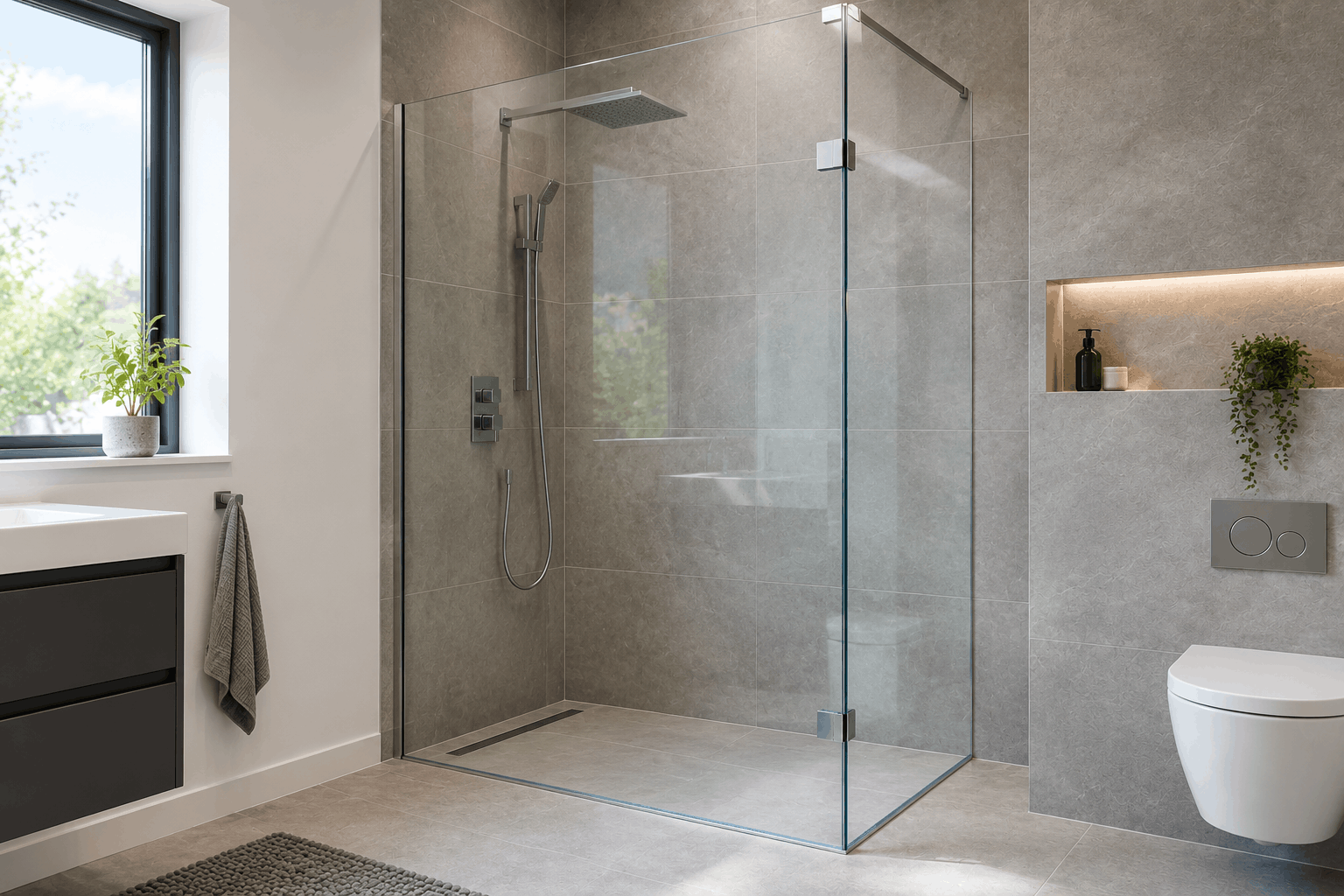
Choosing the right glass thickness is an important part of specifying a shower screen. The glass needs to be suitable for its dimensions, design, support and fixing system while also providing the appropriate safety performance. For installers and trade customers, this means there is no single thickness that should automatically be used for every shower […]
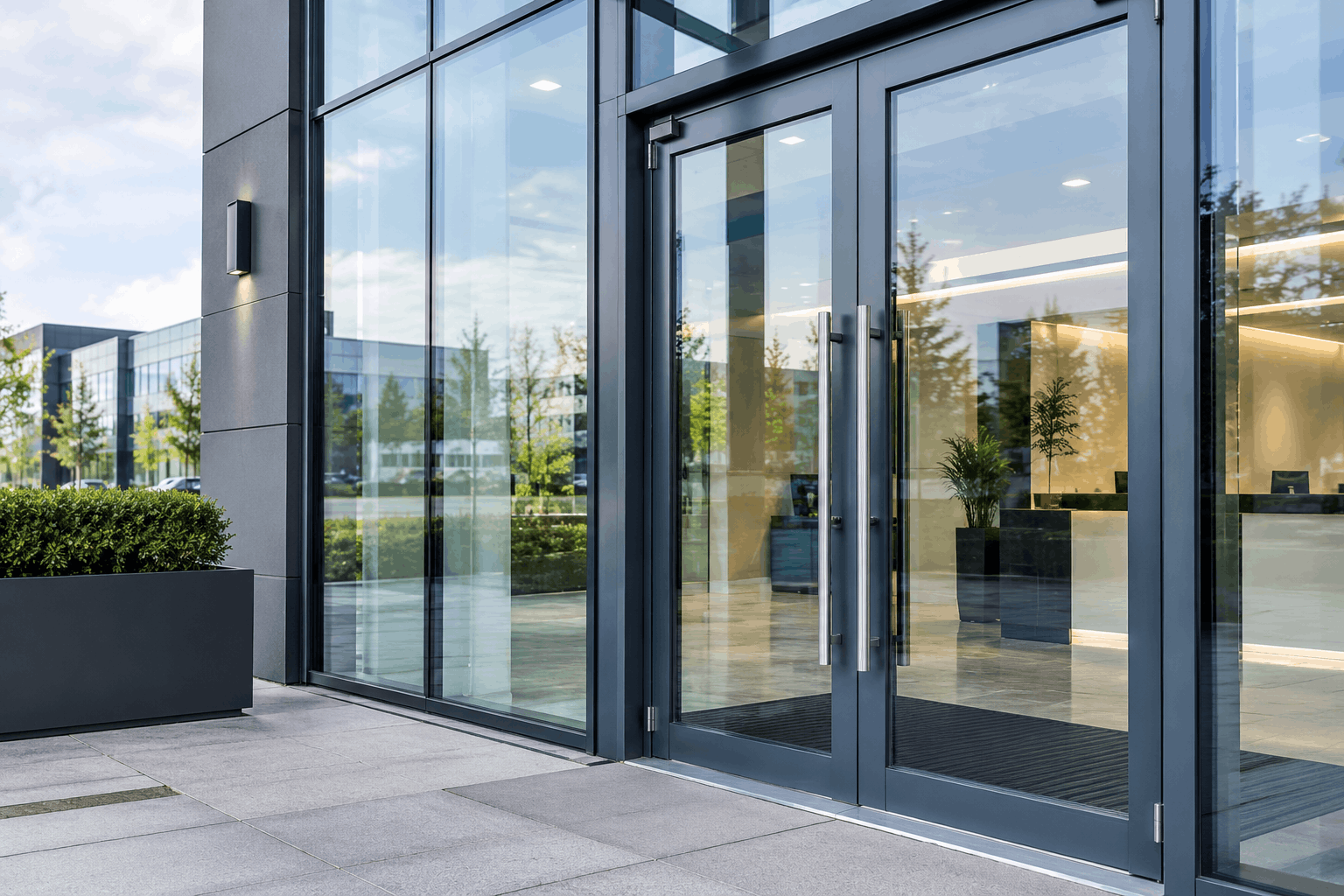
Glass plays an important role in modern commercial buildings, helping create bright entrances, offices and customer-facing spaces. Where additional protection is required, however, the glazing specification also needs to consider security. Security glass is designed to provide greater resistance and protection than standard glazing. The appropriate solution depends on the building, location of the glass […]
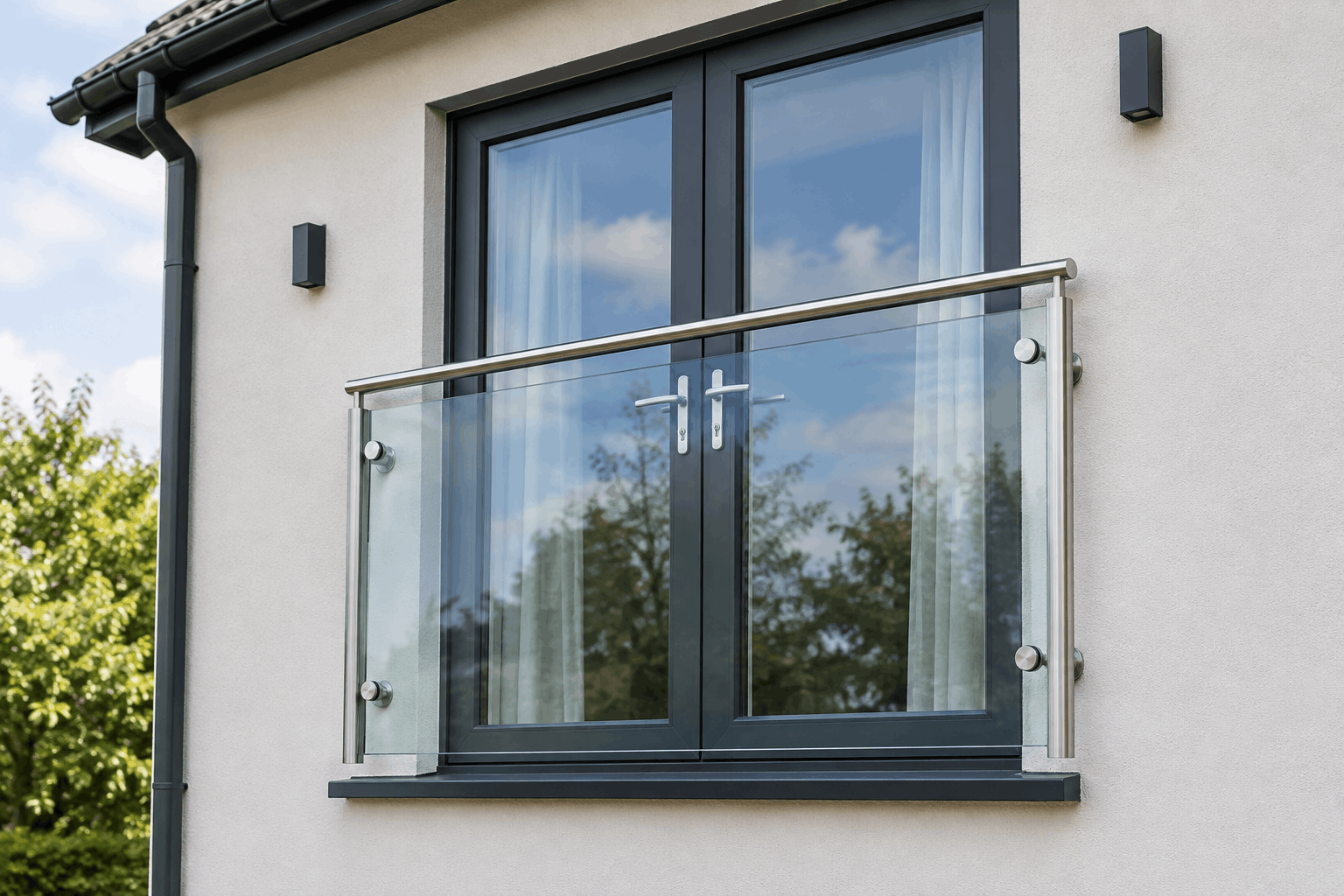
Juliet balconies provide a protective barrier across full-height windows, French doors and other openings at upper-floor level, allowing homeowners to open the doors while maintaining protection from falling. For installers and trade customers, the glass used for a Juliet balcony needs to do more than provide a clear, modern appearance. The glazing forms part of […]
Glass canopies can provide shelter above entrances, walkways and other external areas while maintaining a clean, open appearance. Because canopy glazing is installed overhead, choosing the correct glass is particularly important. Safety, strength, glass retention and the way the canopy is supported all need to be considered as part of the specification. For installers and […]

Front doors often need to balance two competing requirements. Homeowners want natural light to enter the property, but they may not want clear glass providing an unrestricted view into the home. Decorative glass can provide a practical solution by adding privacy and visual interest while still allowing light through the glazing. For installers and trade […]


 Order Tracker


 Customer
Login
Customer
Login