
Glass partitions can help create bright, open office environments while still dividing areas into practical working spaces.
For installers, contractors and trade customers, choosing glass for an internal office partition involves more than appearance. Safety, acoustic performance, privacy and the way the space will be used can all influence the specification.
Different glass types provide different benefits, so there is no single option that is right for every office. This guide explains the main types of glass to consider and what to look at when specifying glazing for internal office partitions.
Glass partitions allow businesses to divide internal spaces without completely closing them off visually.
They can help natural light travel through an office and maintain a sense of openness between different working areas. Depending on the design, glass partitions can be used for meeting rooms, individual offices and other internal spaces.
The glass specification can then be selected around the requirements of that particular area.
For example, a meeting room may place greater importance on acoustic performance and privacy, while a partition in a general working area may prioritise safety, light and appearance.
Toughened glass is commonly used where additional strength and safety are required.
Glasscraft’s toughened glass undergoes a controlled heat treatment process that increases its strength compared with standard glass.
If toughened glass breaks, it fragments into small, blunt pieces rather than large, sharp shards. This provides safer breakage characteristics and makes toughened glass suitable for a range of internal applications.
Glasscraft identifies internal screens as one of the applications for its toughened glass, making it an important option when specifying internal office partitions.
Glasscraft manufactures toughened glass in 4mm, 6mm, 8mm and 10mm thicknesses.
The appropriate thickness for an office partition depends on the system and application rather than appearance alone.
Factors such as panel dimensions, support and fixing method can influence the specification. Installers should therefore select glass that is suitable for the partition system being used and the requirements of the individual project.
Glasscraft’s toughened glass is accredited to EN 12150.
Laminated glass is another option for internal partition systems, particularly where glass retention or additional performance characteristics are required.
Glasscraft’s laminate glass is produced by bonding two or more layers of glass using a PVB interlayer.
If the glass breaks, the interlayer helps hold the fragments together. This provides different safety characteristics to toughened glass, which fragments into small pieces when broken.
The correct choice depends on the partition design and the level of performance required.
Toughened and laminated glass improve safety in different ways.
Toughened glass is heat treated to increase its strength and is designed to break into small, relatively harmless fragments if failure occurs.
Laminated glass uses an interlayer to help retain the glass after breakage.
Neither should automatically be considered the best option for every office partition. The appropriate specification depends on factors such as the partition system, panel dimensions, safety requirements and any additional performance needed from the glazing.
Glass specification can play an important role in controlling sound between different office areas.
Glasscraft’s acoustic glass is designed to reduce noise transmission and can be used where improved acoustic performance is required.
This can be particularly relevant for meeting rooms, private offices and other spaces where conversations or workplace noise need to be better controlled.
The level of acoustic performance required will depend on the building and how each space is used.
Acoustic laminated glass uses a specialist interlayer designed to improve sound insulation.
Glasscraft supplies acoustic laminated glass as part of its processed glass range, providing an option for projects where reducing noise transmission is an important part of the specification.
The final acoustic performance of a partition does not depend on the glass alone. The complete partition construction, including framing, seals and installation, can influence how effectively sound is controlled.
This means acoustic requirements should be considered as part of the complete system.
Acoustic performance may be particularly useful in areas such as:
The level of acoustic performance required can vary considerably between these spaces.
For installers and specifiers, understanding how the room will be used helps determine whether specialist acoustic glass should form part of the partition specification.
Yes. Privacy can be incorporated into glass partition designs where required.
This can be useful in meeting rooms, private offices and other areas where completely clear glazing may not be appropriate.
Glasscraft offers processed and decorative glass options that can provide different visual finishes. The appropriate solution depends on how much privacy is required and the desired appearance of the finished partition.
Privacy requirements should be considered alongside safety and acoustic performance when developing the overall specification.
Laminated glass can provide acoustic benefits because of the interlayer positioned between the panes.
Where higher levels of sound reduction are required, specialist acoustic laminated glass can be specified.
This makes the intended use of the room an important consideration. A general office divider and a confidential meeting room may require very different levels of acoustic performance, even if the partitions appear visually similar.
The complete partition system should always be considered when assessing acoustic performance.
Before choosing glass for an internal office partition, consider:
Considering these factors together helps ensure the glass is selected for the practical requirements of the space rather than appearance alone.
The right choice depends on what the partition needs to achieve.
Toughened glass can provide increased strength and safe breakage characteristics for internal screens.
Laminated glass provides retention after breakage and can offer additional performance depending on its specification.
Acoustic glass is designed specifically for applications where reducing noise transmission is important.
In some projects, the specification may need to address more than one requirement. The glass should therefore be considered alongside the complete partition system and intended use of the room.
Glasscraft manufactures processed glass for a wide range of domestic and commercial applications, including toughened, laminated and acoustic glass.
For installers, contractors and trade customers working on office partition projects, the appropriate specification depends on the safety, acoustic, privacy and design requirements of the individual space.
Considering how the partition will be used from the beginning helps ensure the selected glass provides the right balance of safety, performance and appearance.
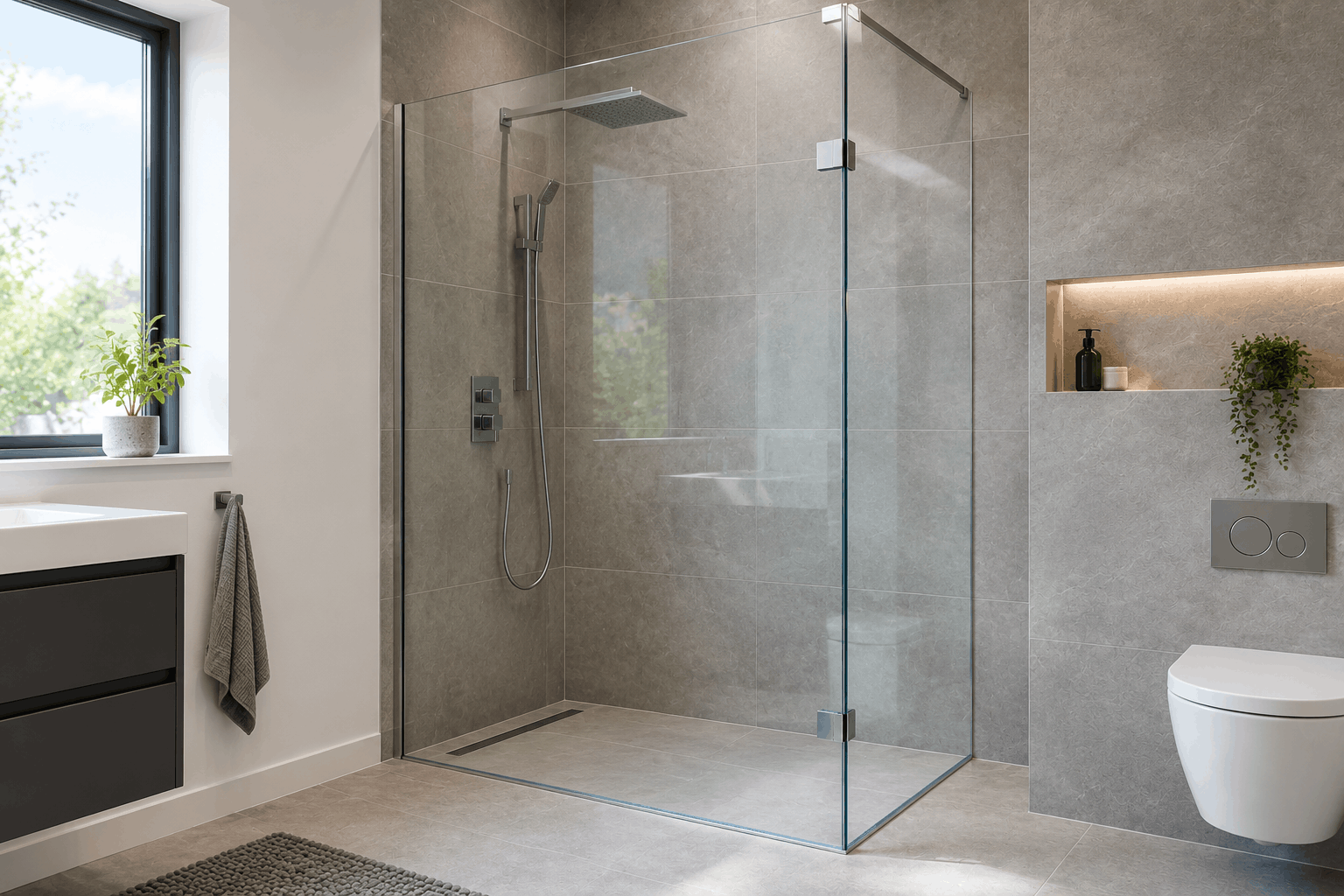
Choosing the right glass thickness is an important part of specifying a shower screen. The glass needs to be suitable for its dimensions, design, support and fixing system while also providing the appropriate safety performance. For installers and trade customers, this means there is no single thickness that should automatically be used for every shower […]
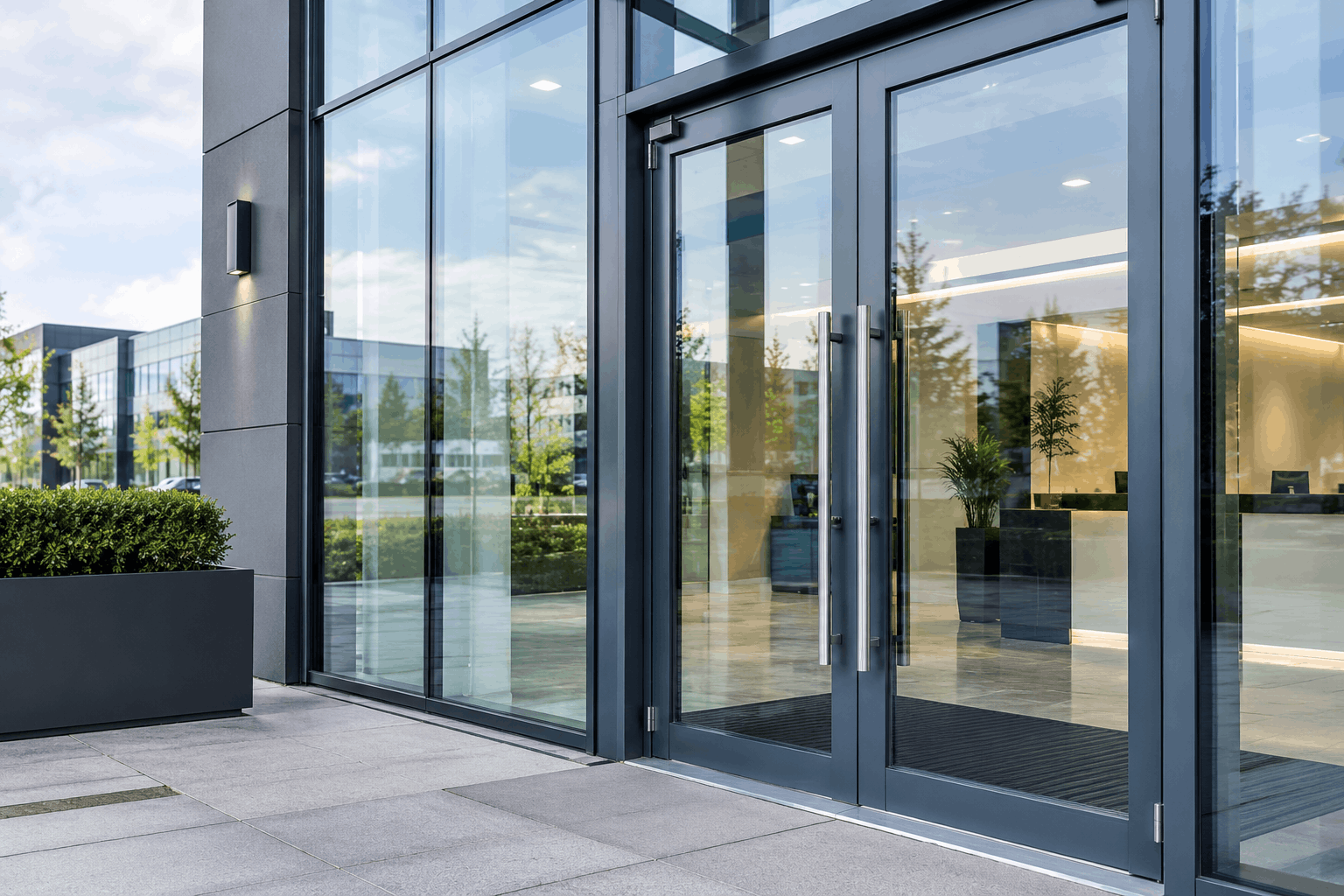
Glass plays an important role in modern commercial buildings, helping create bright entrances, offices and customer-facing spaces. Where additional protection is required, however, the glazing specification also needs to consider security. Security glass is designed to provide greater resistance and protection than standard glazing. The appropriate solution depends on the building, location of the glass […]
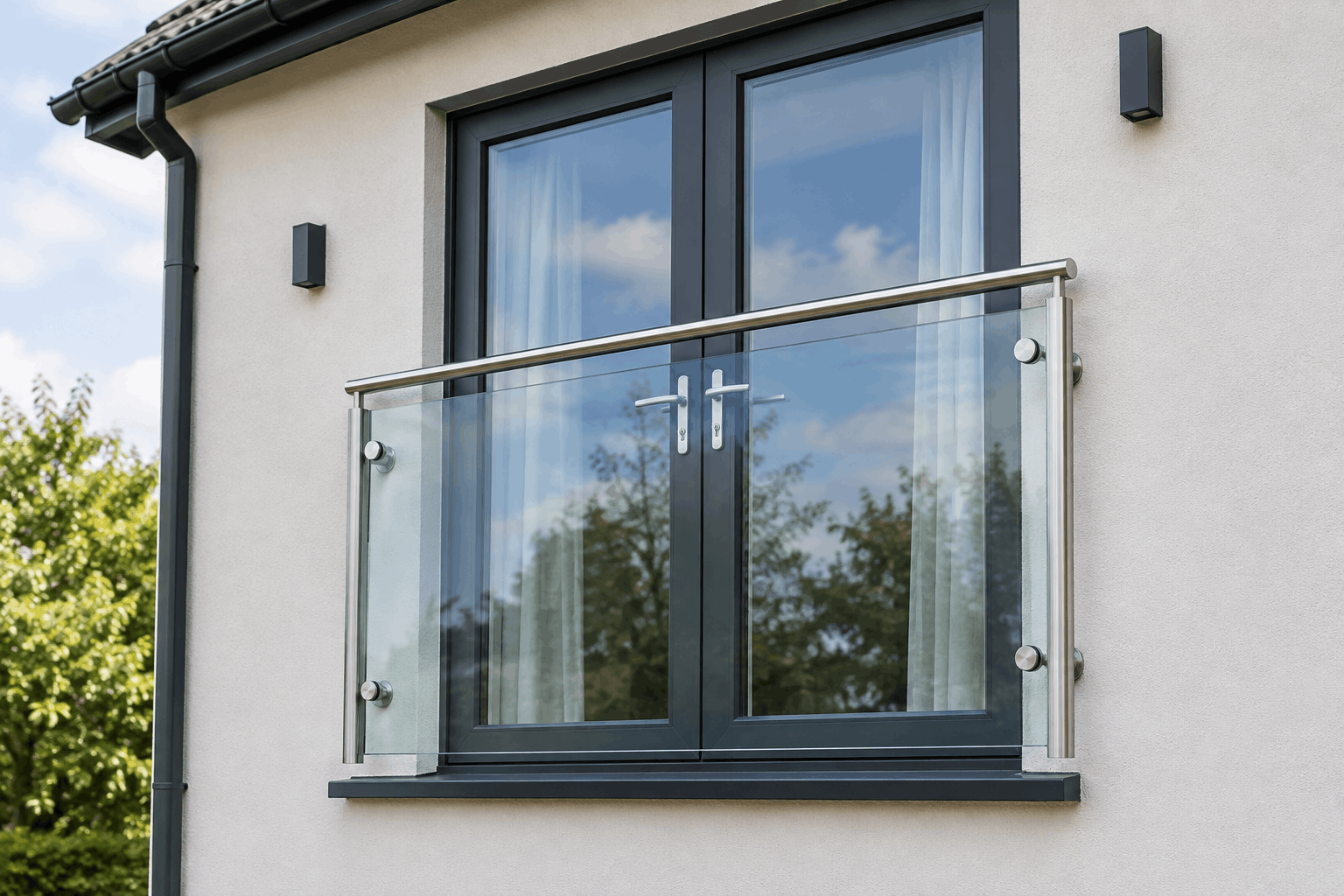
Juliet balconies provide a protective barrier across full-height windows, French doors and other openings at upper-floor level, allowing homeowners to open the doors while maintaining protection from falling. For installers and trade customers, the glass used for a Juliet balcony needs to do more than provide a clear, modern appearance. The glazing forms part of […]
Glass canopies can provide shelter above entrances, walkways and other external areas while maintaining a clean, open appearance. Because canopy glazing is installed overhead, choosing the correct glass is particularly important. Safety, strength, glass retention and the way the canopy is supported all need to be considered as part of the specification. For installers and […]

Front doors often need to balance two competing requirements. Homeowners want natural light to enter the property, but they may not want clear glass providing an unrestricted view into the home. Decorative glass can provide a practical solution by adding privacy and visual interest while still allowing light through the glazing. For installers and trade […]


 Order Tracker


 Customer
Login
Customer
Login