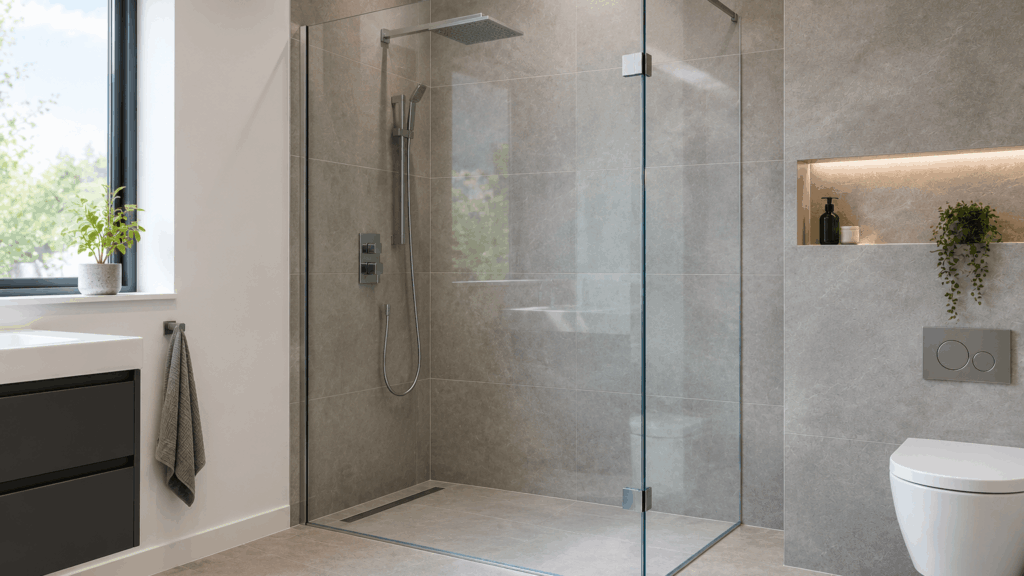
Choosing the right glass thickness is an important part of specifying a shower screen. The glass needs to be suitable for its dimensions, design, support and fixing system while also providing the appropriate safety performance.
For installers and trade customers, this means there is no single thickness that should automatically be used for every shower screen.
Glasscraft manufactures toughened safety glass in several thicknesses, providing options for different processed glass applications. This guide explains what affects shower screen glass thickness and why toughened glass is commonly specified.
Shower screen glass can be manufactured in different thicknesses depending on the design.
Glasscraft produces toughened glass in 4mm, 6mm, 8mm and 10mm thicknesses.
However, the availability of these thicknesses does not mean every option is suitable for every shower screen.
A framed screen, partially framed enclosure and large frameless panel can place different demands on the glass. The correct thickness therefore needs to be determined from the requirements of the particular screen and its supporting system.
Glass thickness can influence the strength, rigidity and overall suitability of a shower screen.
Larger panels and designs with less structural support may have different requirements from smaller panels held within a substantial frame.
The way the glass is fixed also matters. Hinges, brackets, channels and other components need to be compatible with the glass specification.
For installers, choosing a thickness should therefore form part of the overall shower screen design rather than being treated as a separate decision.
Safety is particularly important in bathrooms because people can come into close contact with the glazing.
Toughened glass undergoes controlled heat treatment that increases its strength compared with standard glass.
If toughened glass breaks, it is designed to fragment into small, relatively blunt pieces rather than the larger, sharp shards associated with ordinary annealed glass.
Glasscraft’s toughened glass conforms to EN 12150, the standard covering thermally toughened soda lime silicate safety glass used in buildings.
Glasscraft manufactures toughened glass from 4mm upwards, but the fact that 4mm toughened glass is available does not mean it is appropriate for every shower screen.
Suitability depends on the size of the panel and how it is supported.
A screen incorporated into a supporting frame may have different requirements from a large frameless panel.
Installers should therefore work from the requirements of the shower screen system rather than selecting 4mm glass simply because it is toughened safety glass.
6mm is another thickness available within Glasscraft’s toughened glass range.
As with other thicknesses, its suitability depends on the application.
Panel dimensions, support, hardware and overall screen design should all be considered before 6mm glass is specified.
The important distinction is between the thickness Glasscraft can manufacture and the thickness required for a particular installation. These are not automatically the same thing.
Glasscraft also manufactures toughened glass in 8mm and 10mm thicknesses.
Thicker glass may form part of the specification for larger or less heavily framed designs, including some frameless applications. However, thickness should not be selected using a simple rule based on appearance or screen style.
The size and weight of the panel, fixing arrangement and supporting hardware all need to be suitable for the chosen glass.
Where a shower screen system has a specified glass thickness, installers should follow those requirements.
Frameless screens rely less on a surrounding frame to support the glass.
As a result, the glass itself and the associated hinges, brackets or channels can play a greater structural role in the finished installation.
This can mean a thicker toughened glass specification is required than for some framed systems.
However, not every frameless screen has the same requirements. Panel height, width, fixing points and hardware can all affect the appropriate specification.
The system design should therefore determine the required glass rather than assuming every frameless screen needs the same thickness.
No. A thicker pane is not automatically the best option.
Increasing glass thickness also increases weight. That weight needs to be accommodated by the hinges, brackets, channels and supporting structure.
Using unnecessarily thick glass can therefore create different installation requirements without necessarily providing a practical benefit.
The objective should be to use glass with the appropriate thickness and safety characteristics for the individual shower screen.
Yes. Panel dimensions are an important consideration when specifying glass.
A small fixed panel and a large full-height shower screen do not necessarily require the same specification, even if both use toughened safety glass.
Height, width, support and fixing arrangement all influence how the glass performs within the installation.
This is why measurements need to be established accurately before the glass is ordered.
The hardware used to support a shower screen needs to be compatible with the glass.
Hinges, brackets, channels and other fittings may be designed for particular glass thicknesses and panel weights.
Processing requirements can also affect manufacture because holes, cut-outs and other features may be needed for the chosen hardware.
These details should be established before toughening, as the required processing needs to form part of the glass specification before the toughening process is completed.
Before ordering glass for a shower screen, consider:
Looking at these requirements together helps ensure the glass is manufactured to suit the intended installation.
Shower screen glass can require processing for hinges, handles and other fittings.
With toughened glass, the required cutting, drilling and edge processing needs to be completed before the glass undergoes its final toughening process.
This makes accurate measurements and hardware information particularly important.
For installers, confirming these details before manufacture reduces the risk of ordering glass that does not match the fittings or shower screen design.
There is no single thickness that is best for every shower screen.
Glasscraft manufactures toughened glass in 4mm, 6mm, 8mm and 10mm options, but the appropriate choice depends on the dimensions, design, support and hardware used for the individual screen.
Rather than selecting glass based solely on thickness, installers should consider how the complete shower screen will be constructed and supported.
Glasscraft manufactures toughened safety glass for domestic and commercial processed glass applications.
Available in 4mm, 6mm, 8mm and 10mm thicknesses, its toughened glass provides increased strength and safer breakage characteristics compared with standard glass.
For shower screens, the appropriate thickness should be matched to the dimensions, fixing system and overall screen design. Establishing these requirements before manufacture helps ensure the glass is processed and toughened to the correct specification.
Glass plays an important role in modern commercial buildings, helping create bright entrances, offices and customer-facing spaces. Where additional protection is required, however, the glazing specification also needs to consider security. Security glass is designed to provide greater resistance and protection than standard glazing. The appropriate solution depends on the building, location of the glass […]
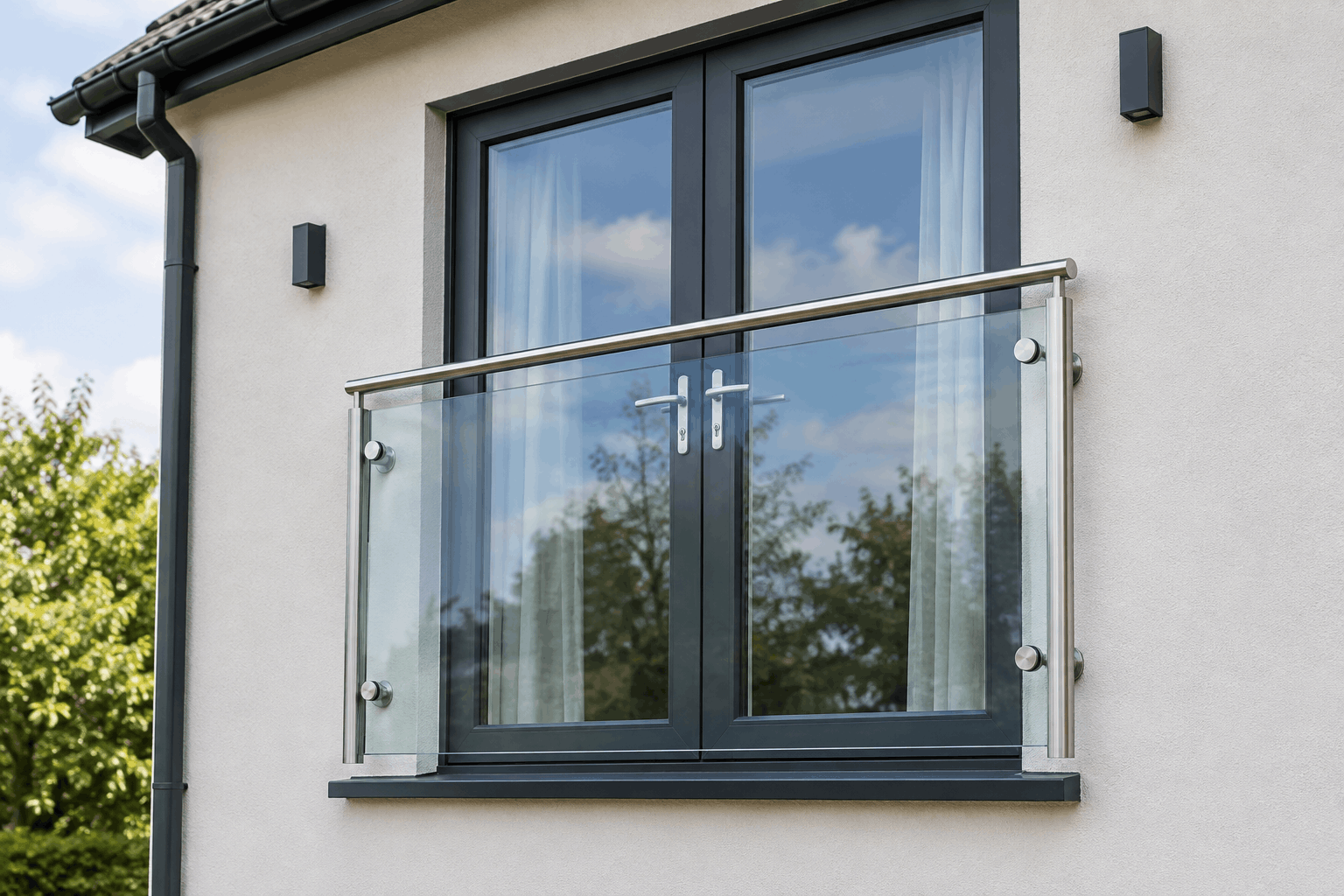
Juliet balconies provide a protective barrier across full-height windows, French doors and other openings at upper-floor level, allowing homeowners to open the doors while maintaining protection from falling. For installers and trade customers, the glass used for a Juliet balcony needs to do more than provide a clear, modern appearance. The glazing forms part of […]
Glass canopies can provide shelter above entrances, walkways and other external areas while maintaining a clean, open appearance. Because canopy glazing is installed overhead, choosing the correct glass is particularly important. Safety, strength, glass retention and the way the canopy is supported all need to be considered as part of the specification. For installers and […]

Front doors often need to balance two competing requirements. Homeowners want natural light to enter the property, but they may not want clear glass providing an unrestricted view into the home. Decorative glass can provide a practical solution by adding privacy and visual interest while still allowing light through the glazing. For installers and trade […]

Glass partitions can help create bright, open office environments while still dividing areas into practical working spaces. For installers, contractors and trade customers, choosing glass for an internal office partition involves more than appearance. Safety, acoustic performance, privacy and the way the space will be used can all influence the specification. Different glass types provide […]


 Order Tracker


 Customer
Login